


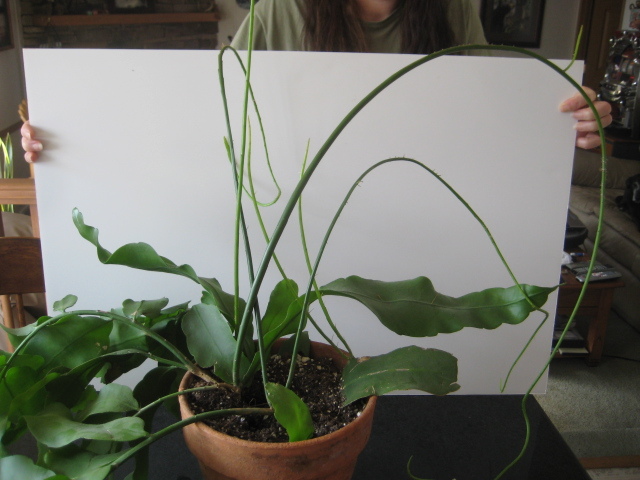
When Dale inherited a mature Epiphyllum oxypetalum—commonly called night-blooming cereus—he was surprised to see shoots stretching over two feet long. He wondered whether the spectacular flowers emerge from those long shoots or from the leaf tips, and whether pruning would encourage blooming.
Those elongated shoots are actually floral shoots. In their native habitat, these cacti rely on bats and moths for pollination. By producing flowers on long, protruding shoots, the plant makes it easier for nocturnal pollinators to locate the blooms.
Do not cut the shoots off if you want flowers. The buds form on this new growth, and removing it would eliminate the coming season's display. After flowering, the shoots naturally die back and can then be removed. Patience is key—enjoy the anticipation and the fragrant, night-opening blossoms when they arrive.
Reviving and Blooming Epiphyllum: Pruning Dead Stems, Fertilizing for Flowers, and Seasonal Care
Pruning an Overgrown Boston Fern
Diagnosing and Treating Squash Vine Decline
Olympiad Rose (36″ Standard): Gold-Medal Red Hybrid Tea for Cutting
Olympiad Rose: Clear Red Hybrid Tea, AARS 1984, Excellent Disease Resistance
Copyright © www.100flowers.win Botanic Garden All Rights Reserved