

Nepenthes 'Miranda' Not Pitchering: Low Humidity Is the Cause
N. Miranda is a lowland hybrid requiring 70%+ humidity. Outdoors with misters may not suffice if ambient RH is low. Best: humid terrarium or 3–4× daily misting in shade. Without high humidity, it survives but wont pitche

Storing Moist Peat Mix: Condensation Is Normal If Mix Is Dry
Condensation in a sealed tote of peat mix is just residual moisture—no problem if the mix was stored dry. Wet peat molds and breaks down in months. Store dry media in opaque containers out of sun.
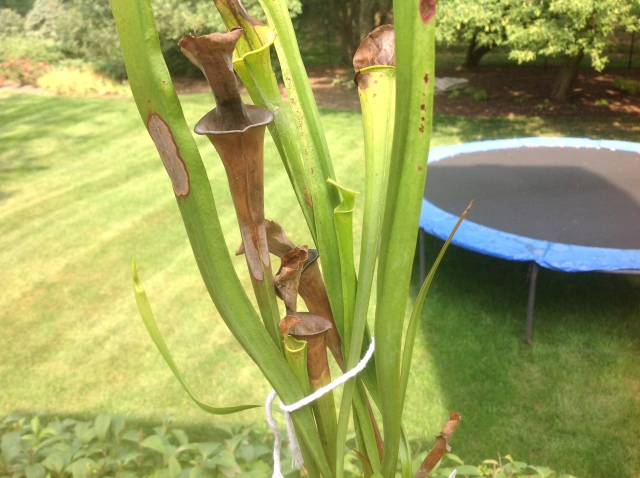
Sarracenia flava Summer Browning and Phyllodia: Normal Aging
S. flava is an early-season species. Pitchers brown in summer, replaced by phyllodia. Curled leaf is a transitioning pitcher→phyllodia. All normal for this time of year.
Sarracenia leucophylla Summer Phyllodia: Normal Seasonal Cycle
S. leucophylla produces phyllodia (non-carnivorous leaves) in summer heat. Fall brings the showy pitchers. This is normal—your plant is on schedule.
Darlingtonia Winter Planting and Water Quality: Treat Like Sarracenia Initially
Winter-planted bare-root Darlingtonia: treat like Sarracenia (cool, coarse mix). Spring: add midday shade cloth, daily top-watering to cool roots. Use low-mineral water (<50 ppm). Your well water (70–85 ppm) is okay temp
Vermiculite in Ultra-Highland Nepenthes Mix: Not Recommended
Vermiculite breaks down into slime over time. Peter DAmato (Savage Garden) now advises against it. Ultra-highland Nepenthes (rajah, edwardsiana, etc.) grow in mossy conditions—use live sphagnum or peat/perlite.
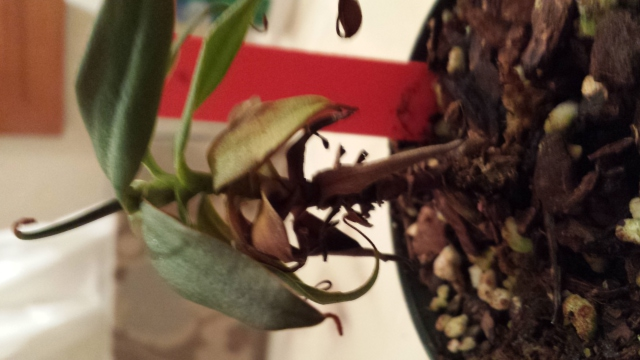
Unknown Nepenthes Decline: Humidity and Weak Fertilizer May Help
Plant (possibly N. albomarginata hybrid) looks stressed after repotting. Increase humidity to reduce transpiration while roots recover. Add very weak fertilizer (1/8 tsp/gal). Warm, humid conditions suit this lowlander t
Sunshine Mix #7 Unsafe for Carnivorous Plants: Contains Fertilizer and Lime
Commercial mixes (Sunshine #7, etc.) contain wetting agents, lime, and fertilizer—lethal to flytraps and sundews, harmful long-term to Sarracenia. No commercial mix is safe. Mix your own: peat + perlite/sand.
Nepenthes cutisii Flower Stalk: Remove Unless Breeding
Cut off flower stalk unless you have a compatible opposite-sex plant for pollination. Flowers arent showy and smell bad. Shipping stress may trigger blooming.
Building an In-Ground Bog Garden: Drainage and Companion Plants
For a lined bog (16 deep, 2 sand base, peat/sand fill), put drainage holes in the bottom. Allows flow-through, better aeration, less peat breakdown. In humid Louisiana, water loss isnt an issue. Flush with pure water if
Dewthread (Sarracenia) Leaf Cuttings: When to Pot Up
Wait for visible plantlets with tiny leaves AND roots. Leave attached to mother leaf when potting. Separate next spring/summer when larger—too delicate now.
Trimming Brown and Deformed Sarracenia Leaves: Best Practice
Remove entire brown or aphid-deformed leaves. For early-season species (S. flava, S. oreophila), leave green pitcher bases until winter—they still digest prey. Always remove last years pitchers in spring to expose rhizom
Mexican Pinguicula Heat Stress and Early Dormancy in Iowa
P. cyclosecta and P. moctezumae showed heat stress (90°F+) and possible early dry-season dormancy. P. moctezumae especially needs high insect intake or weak foliar orchid fertilizer (1/4 tsp/gal, urea-free, biweekly). R
Sarracenia Leaf Pullings: Propagation Method and Timing
S. purpurea and S. psittacina can be propagated from leaf pullings (with white rhizome tip). Spring is best. Place in distilled water, bright indirect light. Plantlets appear in ~2 months—slow initially. See ICPS articl
Windowsill Nepenthes and Heliamphora: Species Selection for Lowland Conditions
With summer 26–28°C/20–24°C and winter 22–24°C/19–20°C (40–60% humidity), you have lowland conditions. All listed species (truncata, vogelii, fusca, rafflesiana, veitchii, veitchii × lowii) will thrive—get lowland veitch
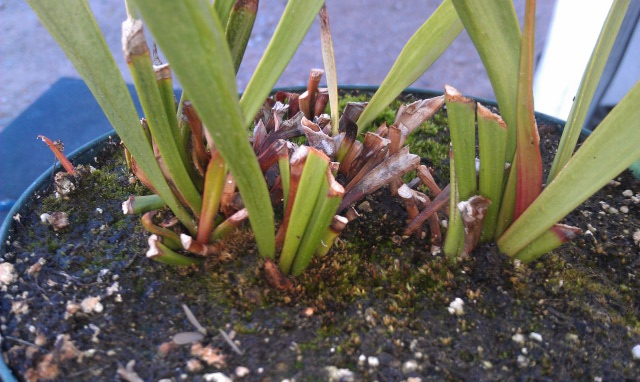
Sarracenia Thrips Outbreak: Orthene (Acephate) Beats Imidacloprid
Thrips on Sarracenia (minor hybrid, alata, Scarlet Belle) resist imidacloprid (Bayer products). Effective treatment: Orthene 75% (acephate) at 1 tsp/gallon. Spray crown and soil drench in evening. Transplant 1 week late
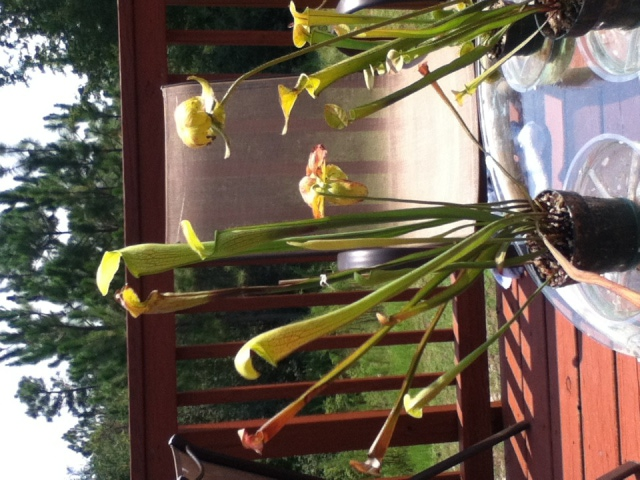
Sarracenia Minor Brown Spot: Likely Physical Damage, Not Disease
Small brown spot on an otherwise healthy S. minor hybrid is probably physical damage (bird, insect, pot crowding). New growth looks normal—no pest signs. Repot into larger container soon—crowded rhizome may have caused
Acclimating Heliamphora and Cephalotus to Lower Humidity
In a 40-gallon tank, cover 3/4 of the top to maintain 60–70% humidity. Gradually open over 2 weeks to reach 50%. Both tolerate 50% once adapted. Cephalotus prefers lower long-term humidity (prevents powdery mildew). Hel
Highland vs. Lowland Nepenthes: Temperature and Humidity Differences
Highlanders need cool nights (50–60°F), moderate days, high humidity. Lowlanders need warm days/nights (70–85°F) and very high humidity. See The CP Forums Nepenthes Basic Care Guide for detailed breakdown.
Water Level for Temperate Pinguicula: Minimal Tray Water
Keep water ≤ 1/4 up the pot. Top-water occasionally. Temperate butterworts dont need constant deep saturation like Sarracenia.
Copyright © www.100flowers.win Botanic Garden All Rights Reserved