
Restoring Catalpa Worms for Fish Bait
Why They Disappeared Insecticide drift, viral disease, or parasite outbreak likely wiped out the local population of catalpa sphinx moth (Ceratomia catalpae). Re-establishment Collect egg masses or young caterpillars f

Transplanting a 30-Year-Old Magnolia in Scotland
Timing Deciduous magnolias: move in early spring (before leaf-out) or autumn (after leaf color, before freeze). Root Ball Size Width: 9–12 in per inch trunk diameter. Depth: 6 in per inch diameter. Example: 4-in trunk →
Ribes Species as White Pine Blister Rust Hosts
Primary Alternate Hosts Ribes lacustre, R. nigrum (black currant), and R. viscosissimum are most susceptible. Most pathologists consider all Ribes potential hosts. Regulatory Landscape Federal ban on black currant lifte
Caterpillars on Weeping Willow in NJ: Bt or Contact Sprays
Quick Control Spray foliage with Bacillus thuringiensis (Bt) — kills only caterpillars, safe for bees. Or use contact insecticides: carbaryl (Sevin), malathion, or spinosad. Cover all leaves; caterpillars must ingest Bt.
Borers in Young Maple; Lilac Decline
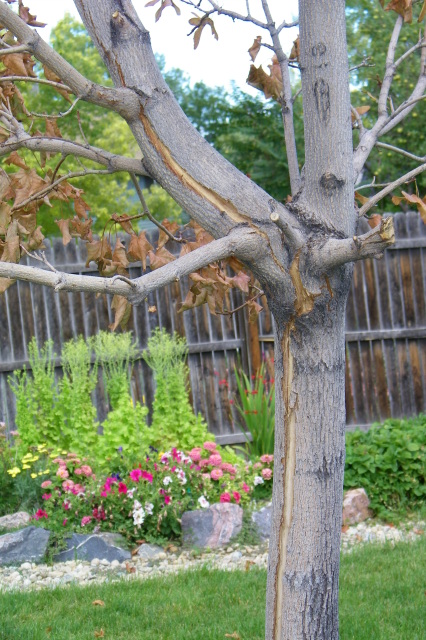
Maple Borer Treatment White larvae under splitting bark = borers. Spray trunk with Merit (imidacloprid) now. Fertilize with 10-10-10 at 1 lb/inch diameter to boost vigor. Lilac Issues Sparse foliage and no bloom suggest
Large Transplanted Maples and Birches: Water, Wait, Don't Fertilize Yet
Root Loss Is the Issue 15–21 ft trees moved in Oct–Dec have <10% of their original root mass. Droopy leaves, rust spots, and yellowing birches are classic water-stress symptoms. Immediate Care Water 1 inch every 3rd da
Birch Tree 3 Feet from Septic Tank: High Risk, Better Alternatives
Birch Roots Seek Septic Moisture Birches are notorious for invading drain fields. At 3 ft from the tank cap, roots will almost certainly enter the system. Recommended Action Remove the birch now (before major damage). R
Persistent Sewer Roots After Tree Removal: Chemical Control
Roots Can Survive Stump Removal Living roots from the cut tree, or from neighboring trees, continue growing into pipe joints. Chemical Treatment Options Copper sulfate (2–4 lbs flushed down toilet) — kills roots in pip
Ants on River Birch: Farming Aphids
The Connection Ants tend aphids for honeydew. Check leaves for sticky residue and curled foliage—signs of aphids. Management If honeydew present: apply soil systemic imidacloprid (Bayer Advanced) for aphids. If no hone
Don't Top Columnar Aspen: Fertilize Instead
Topping Harms, Not Helps Removing the leader on a columnar Swedish aspen (Populus tremula Erecta) destroys its natural form, induces weak sprouts, and does not increase density. Correct Approach Prune only dead wood. F
Purpleleaf Sand Cherry Unsuitable for Central California
Zone Mismatch Prunus × cistena is rated Zones 3–7. Central CA (Zone 9, 100°F+ summers) exceeds its heat tolerance. It may survive a few years but will likely suffer dieback, borers, and premature death. Better Alternati
Watering a New Weeping Cherry in Full Sun
Schedule First 2 months: 1 inch every other day (measure with pan). Rest of season: 1 inch every 3rd day. Year 2+: 1 inch weekly if no rain. Best Practices Water late afternoon to reduce evaporation. Mulch 3 inches,
Laceleaf Japanese Maple Leaf Color Fade in Charlotte Heat
Why Red Turns Green High nitrogen (often from lawn fertilizer runoff) and intense sun/heat reduce anthocyanin (red pigment) production. Young trees also commonly green up in their first summers. Corrective Care Water d
Planting White Birch in South Dakota: Site Selection and Spacing
Growth Profile Paper birch (Betula papyrifera): medium growth rate, 20–35 ft tall, 15–25 ft spread. Roots extend 1.5× canopy width. Site Requirements Full sun. Well-drained, slightly acidic soil. Keep away from septic
Propagating a Sentimental White Pine from Seed
Only Option: Seeds White pine (Pinus strobus) cannot be rooted from cuttings. Growing from seed preserves the genetic lineage. Seed Collection and Sowing Collect cones in fall before they open. Dry in a paper bag until
Edible Tree Leaves: Resources and Cautions
Reliable References Wikipedia: List of plants with edible leaves Georgia Poison Control: Poisonous plants list General Rules Positively identify species (use botanical name). Know which part is edible and at what sta
Cankerworm Outbreak on Oaks in Winnipeg: Wait It Out
One Generation, No Tree Death Spring cankerworms (Paleacrita vernata) defoliate once per year. Healthy oaks releaf by midsummer. Mortality only occurs after 3+ consecutive severe years. Current Year: Too Late to Spray I
Protecting Loblolly Pines from Bark Beetles in Houston
Systemic Soil Drenches Dont Work on Bark Beetles Imidacloprid moves in xylem (water-conducting tissue). Bark beetles feed in phloem (inner bark)—they dont ingest enough toxin. Effective Prevention: Trunk Spray Spray tru
Watering New Leyland Cypress and Plum Trees
First Month Water every 3rd day with 1 inch (measure with a pan under the sprinkler). Skip if rain ≥1 inch. Rest of First Season Water weekly with 1 inch during dry spells. Mulch 3 inches of organic mulch, 3-inch gap a
Carpenter Ants in a 150-Year-Old Live Oak: Not a Tree Threat
Ecology Carpenter ants nest in already decayed wood (heartwood rot, old wounds). They do not kill living tissue. Their excavation can actually slow decay by drying the cavity. When to Act Only if ants are entering the h
Copyright © www.100flowers.win Botanic Garden All Rights Reserved