
Cedar Planting Failures: Burlap Left On, Overwatered, Wrong Mulch
Contractor Errors Burlap/wire not removed → root girdling. Clay backfill, no topsoil → poor drainage. 5–6 in mulch → suffocation, vole habitat. Overwatering → root rot. Remediation Demand proper replanting of dead tr

Cherry Pouch Galls on Black Cherry: Cosmetic Mite Damage
Identification Finger-like projections on leaf upper surface = cherry pouch galls induced by eriophyid mites. No Harm, No Spray Mites feed inside galls. Galls drop with leaves. Next year often gall-free. Spraying window
Webworms in Dallas: Identify Type, Band Trunks for Prevention
Two Species Eastern tent caterpillar — spring, webs in crotches. Fall webworm — late summer, webs on branch tips. Current Outbreak If webs now (spring) = tent caterpillar. Remove webs by hand/pole. Bt spray on foliage
Carpenter Bees in Dead Birch Log: No Threat to Living Trees
Identification Perfect ½-in holes + sawdust = carpenter bees (Xylocopa virginica). They nest in dead, dry wood only. Living Birches Safe Carpenter bees do not attack healthy trees. No treatment needed for your grove. L
Dog-Stripped Maple Bark: Clean Wound, Deter Dog with Hot Sauce
75% Bark Loss = High Mortality Risk If cambium severed full circle, tree dies. If strips remain connected, survival possible. Immediate Care Trim loose bark. No wound paint. Spray Merit to prevent borers. Apply capsaic
Maple Borer (Xylotrechus aceris) Control with Merit Trunk Spray
Pest ID Longhorned beetle larvae tunneling in maple trunk; exit holes, frass, scars. Treatment Spray trunk with Merit (imidacloprid) or homeowner version Bayer Advanced. Kills larvae inside. Apply when adults active (sp
Red Maple Leaf Spots vs. Galls: Identify Before Treating
Two Possibilities Fungal leaf spots — small, defined lesions; treat with fungicide at bud break. Insect galls — raised, hollow structures; no treatment needed. Diagnosis Compare photos to OSU fact sheets (links in ori
Hawthorn Bark Peeling with Aphids and Ants: Normal Growth + Pest
Bark Change Young hawthorn bark naturally exfoliates as it transitions to rougher mature bark. Insects White fluff + ants = cottony aphids. Treat with contact spray (insecticidal soap, horticultural oil) or soil systemi
Maple Leaf Galls: Harmless, No Treatment Needed
What They Are Hollow egg bumps on leaves = galls induced by mites or wasps. Empty because inhabitants have emerged. Impact Cosmetic only. Tree vigor unaffected. Populations vary yearly. Action None. Sprays ineffective
Contorted Cherry Transplant Shock: Measure Water, Mulch
Watering Rule 1 inch every 3rd day (pan method). Over- and under-watering both cause wilting. Mulch 3 inches. Shock Is Normal Day-after-planting droop = root disturbance. Consistent moisture + time = recovery.
Planting 6-ft White Paper Birch: Hole, Mulch, Water, No Staking
Procedure Hole 2× root ball width, same depth. Remove burlap/wire. Backfill native soil. Mulch 3 inches, no volcano. Water 1 inch every 3rd day 4–6 weeks, then weekly. No fertilizer year one. Staking not needed unless e
Eastern Red Cedar and Rocky Mountain Juniper in Southern California
Adaptability Eastern red cedar (Juniperus virginiana) tolerates heat. Rocky Mountain juniper (J. scopulorum) prefers cooler summers; may struggle in 100°F. Planting Hole 2× container width. Mulch 3 inches. Water when d
Live Oak with Stone Pavers: Roots Suffocating, Branches Shedding
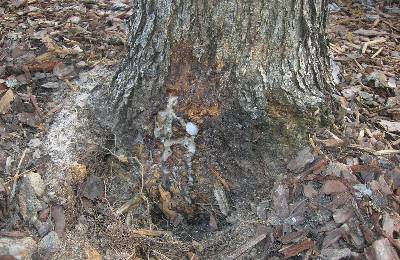
Pavers = Compacted, Dry Soil Roots cant breathe or absorb water. Tree sheds branches to match reduced root capacity. Mitigation Remove pavers within drip line if possible. If not, drill 2-in holes through pavers (12-in
Young Oak with Trunk Canker and Bronze Leaves: Poor Prognosis
Canker Girdling = Vascular Failure Canker encircling lower trunk cuts off water/food flow. Bronze leaves = starvation. Fertilizer/water wont reverse it. Try Anyway Fall 10-10-10 at 1 lb/inch diameter + weekly deep water
River Birch Aphids, Cones, and Sooty Mold: Systemic Insecticide Fix
Three Issues, One Cause Dripping sap + sticky leaves + black mold = aphid honeydew. Pine-cone growths = birch catkins (normal). Solution for Large Tree Soil drench with imidacloprid (Bayer Advanced Tree & Shrub Insect C
Stump Sprouting: Species and Age Determine Regrowth
General Rules Hardwoods (oak, maple, poplar) → sprout vigorously from roots/stump. Conifers (pine, spruce, fir) → rarely sprout. Young trees → more sprouts. Dead tree when cut → no sprouts (roots dead). Management Sel
Dog Rope Girdled Young Maple: Assess Cambium, Prevent Borers
Critical Check If bark removed full circumference → cambium severed → tree will die (leaves wilt in days). If partial, it may survive. If Alive Trim loose bark. Spray wound with Merit (borer prevention). Water 1 inch/w
Aphids on Large Oak: Soil Systemic Better Than Trunk Injection or Spray
Options Ranked Soil drench imidacloprid (Bayer Advanced) — easy, safe, season-long, no drift. Trunk spray — requires high-pressure equipment for large canopy. Trunk injection — wounds tree; not recommended for aphids.
Moving a 4-Year Chinese Pistache: Root Ball Specs and Aftercare
Root Ball Trunk diameter? Assume 2–3 in → ball 18–36 in wide, 12–18 in deep. Hand-digging possible but heavy. Keep ball intact, wrap in burlap. Replanting Hole 2× ball width, same depth. Water 1 inch daily 2 weeks, the
Leafless 3-Year Willow Oak in Northern Virginia: Water and Wait
Green Cambium = Alive Scratch test shows green. Tree may be delayed by late frost or root issue. Action Water 1 inch every 3rd day (pan method). If no leaves in 2–3 weeks, consult arborist. Do not fertilize.
Copyright © www.100flowers.win Botanic Garden All Rights Reserved