
Leaf Damage on New Purple Leaf Plum
Caterpillar or Beetle? Broad-Spectrum Spray Unseen pests eating plum leaves: spray Bt for caterpillars, or carbaryl (Sevin) if insect type unknown. Fertilize with 13-13-13 at ½ lb per trunk diameter inch.

Don't Top Young Crimson King Maple
Let It Branch Naturally A 12-foot whip with no side branches will develop them on its own. Topping creates a bush, not a tree, and risks death. Patience yields proper form.
Birch Trees and Septic Systems: High Risk
Water-Loving Roots Threaten Leach Fields Birches (especially white, paper, yellow) are notorious for clogging septic lines due to shallow, water-seeking roots. River birch is more resistant to bronze birch borer and tole
Cicada Flagging: Brown Leaf Clusters on Chicago Trees
Egg-Laying Damage, Not Fatal Brown, dead twig clusters (flagging) on oaks and other trees after cicada emergence. Females slit ¼–½ twigs to lay eggs. Twigs wilt, die, may break. Young trees (<4 yrs) most affected. Trees
Minor Leaf Spots on Young Japanese Maple
Cosmetic Fungal Spots, No Treatment Needed 50% leaf area affected. Tree health unaffected. No spray needed.
Herbicide Damage to Pin Oak from Weed-and-Feed
Dicamba/Triclopyr Root Uptake Pin oak with rusty, yellow, wilted leaves after nearby weed-and-feed application. Broadleaf herbicides (dicamba, triclopyr) move through soil to tree roots. Roots extend 1.5× canopy width.
Black Knot and Leaf Issues on Young Higan Cherry
Black Knot Requires Immediate Pruning Black tar-like galls on Higan cherry = black knot. Prune 2–3 below galls in dormancy. On large limbs, chisel out +1 healthy bark. Burn prunings. Fungicides (captan) from bloom to shu
Weeping Willow with Dead Trunk but Live Sprouts
Regrowing from Root Sprouts Dead main trunk with basal sprouts = root system alive. Cut dead trunk. Let sprouts grow to 18–24, select 1–2 strongest, remove rest. New leader will grow rapidly from established roots.
Pear Tree with Cavity and Leaf Spots
Fruit Safe, Cavity Manageable Bartlett pear with basal cavity, dead limbs, and black leaf spots: pears are edible (peel spotted fruit). Leaf spots = fungus; spray fungicide at bud break next spring. Cavity wont heal but
Bark Beetle Infestation in Shaggy Bark Juniper
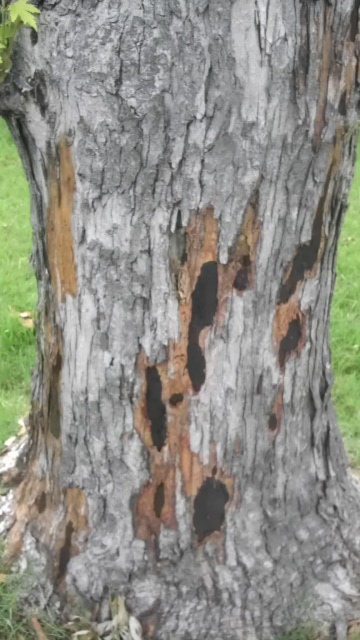
Rapid Decline Requires Quick Action Sudden needle drop + 1/8 holes in trunk = bark beetles. If any green foliage remains, spray trunk to ½ height with bark beetle insecticide (e.g., Onyx). If completely brown, remove tre
White Oak Slime Flux: Same as Other Oaks
Foul-Smelling Seepage at Base White oak leaking odorous liquid near ground with gnats and beetles = slime flux. Bacterial fermentation in heartwood creates pressure, forcing sap out. Attracts insects. Usually stops witho
Germinating Store-Bought Cherry Seeds
Cold Stratification Required Cherry pits need 1–2 cold periods (90–120 days below 40°F). Plant in pots, leave outside winter, or refrigerate in sealed bag. Germination in spring. Resulting trees wont match parent fruit (
Slime Flux (Wetwood) in Oak Trees
Bacterial Ooze at Soil Line Brownish-green puddle with black bugs at oak base = slime flux. Bacteria ferment wood, pressure forces sap out. Common on oaks, often at flare roots. Triggered by heat/drought stress. No cure,
Removing Cypress Knees Without Killing the Tree
Cut Knees at Ground Level Cypress knees are root extensions for gas exchange. Roundup on knees kills the whole tree. Instead, cut knees flush with soil. New ones may appear elsewhere, but the cut ones wont regrow. Only r
Identifying a Mystery Hickory Tree in Wisconsin
Using a Dichotomous Key for Hickory ID A Wisconsin backyard tree with husked nuts is a hickory (*Carya* spp.). 15 native species. Identification uses bud type, leaflet count, bark texture, twig hairiness. Likely mockernu
Key Lime Tree Not Fruiting: Causes and Solutions
Maturity, Pollination, and Care Factors A healthy but non-fruiting Key lime in Florida may be: Seed-grown: 9–10 years to fruit, variable quality. Grafted: fruits in 3–4 years. Indoors during bloom: needs hand pollinatio
Olive Tree Roots in Sewer Lines: Options
Roots Exploit Leaks, Not Intact Pipes Olive tree roots in old clay sewer lines indicate pipe cracks/leaks. Roots dont penetrate sound PVC. Options: Copper sulfate (1 lb every 6 months) kills roots in pipes. Replace clay
Maple Sap Dripping: Aphids or Cicada Damage?
Diagnosing Sticky Residue Clear/brown sticky liquid on cars under a sugar maple: check leaves. Sticky leaves = aphid honeydew. Treat with systemic soil-applied insecticide. Non-sticky leaves + cicada egg-laying slits in
Dogwood Pruning and Borer Monitoring After Topping
Corrective Pruning and Borer Vigilance 1/3 canopy. Topping risks imbalance and borer entry at wounds. Dogwood Borer Signs and Prevention Watch for sawdust-like frass at wounds, swollen/knotty bark, wilting crown. Preven
Cherry Tree Decline from Soil Grade Change
Root Suffocation from Added Soil Raising soil 6 inches around a mature flowering cherry compressed root-zone air pores, killing fine roots. Result: branch dieback, leaf loss on lower canopy. Remedy: remove at least half
Copyright © www.100flowers.win Botanic Garden All Rights Reserved