
Eliminating Invasive Tree Sprouts: Glyphosate Wipe Technique
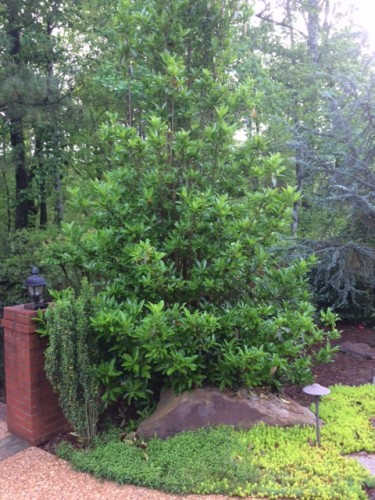
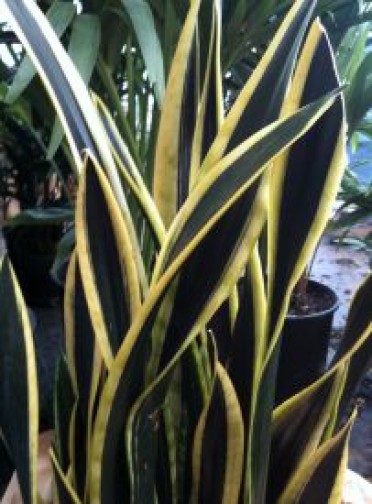
Targeted Herbicide Application for Sprout Control Unidentified fast-sprouting trees (likely Siberian elm, tree of heaven, or cottonwood) require systemic translocation to roots for lasting control. Glyphosate Wipe Metho

Bald Cypress Knees at Foundation: Root Barrier Solution
Cypress Knees: Biology and Behavior Knees = pneumatophores (oxygen exchange structures) from surface roots. Grow upward from roots in wet/low-oxygen soils. Do not grow downward—cannot penetrate foundation footers. Dry s
Oak Thinning for Acorn Production: Wildlife Management Guide
Thinning Increases Acorn Yield Per Tree Your observation is correct: edge trees in dense stands produce more acorns. Crowding limits crown development, photosynthesis, and reproductive output. Science-Based Thinning Ta
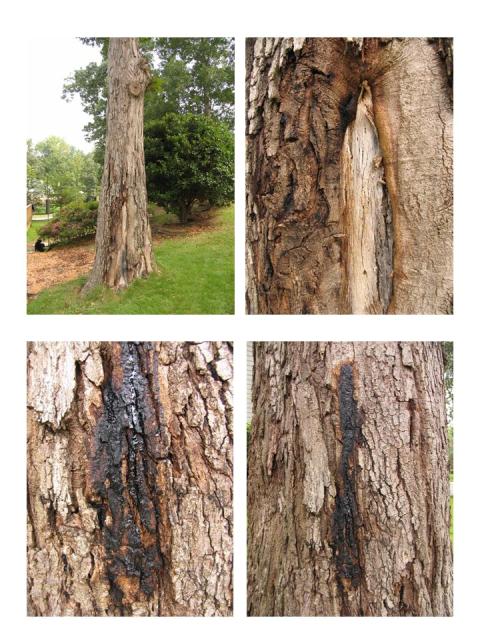
White Oak Trunk Wounds: Borer Management and Vigor Improvement
Old Wounds Healing, But Borers Exploiting Cracks Vertical sealed wounds with dark weeping indicate borer activity in stress-induced cracks. Carpenter ants are secondary (nesting in decayed wood, not causing it). Immedia
Preventing Mesquite Pod Production: Florel Growth Regulator
Stop Pods by Stopping Flowering Mesquite (Prosopis) pods form from fertilized flowers. Florel® (ethephon) applied at bloom inhibits fruit set by releasing ethylene, a natural plant hormone that aborts developing ovaries.
Estimating Douglas Fir Height from Stump Diameter
DBH-Height Relationship for Douglas Fir Research (Oregon State University) shows a 7.5-inch DBH Douglas fir typically reaches 50-55 feet tall at medium growth rates in western Oregon. Reference Data OSU Research Contri
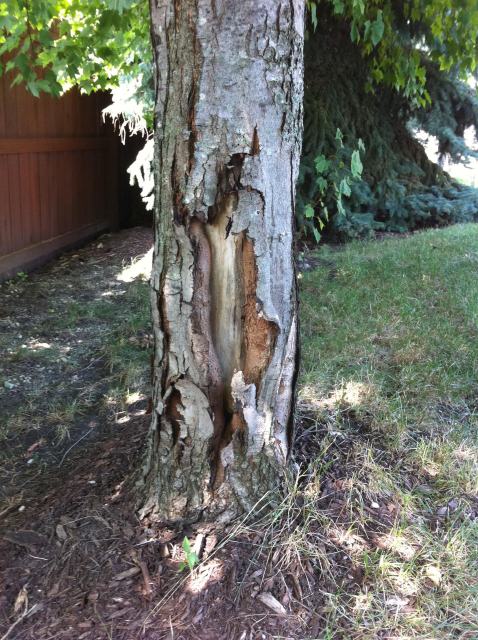
Maple Trunk Split: Wound Healing and Borer Prevention
Freeze Crack / Sunscald Wound Healing Naturally The vertical split with rolled edges (callus formation) shows active compartmentalization—the tree is sealing the wound. Thin-barked maples (Acer) are prone to southwest in
Mountain Ash Not Fruiting: Patience After Transplant
Why Your 2009 Mountain Ash Has No Berries Normal establishment behavior. Recently transplanted trees (1-3 years) prioritize root growth over flowering/fruiting. Your trees healthy foliage confirms its allocating resource
Preventing Hickory Nut Production: Chemical Options and Realities
The Squirrel Problem: Nuts + Droppings = Deck War Zone Hickory (Carya) nut prevention is chemically possible but practically difficult on large trees. Available Chemical Approaches Florel (Ethephon) - Foliar Spray App
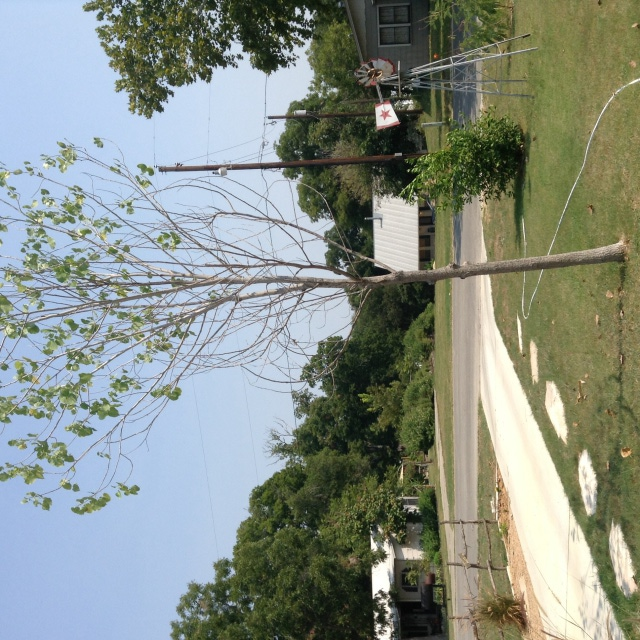
Cottonless Cottonwood Transplant Failure: Diagnosis and Replacement
Rapid Leaf Death = Likely Pre-Existing Root Damage Leaves dying within 2 days of planting indicates the tree was already compromised (root-bound, dried out, or damaged at nursery), not your watering. Viability Test Scr
Co-Dominant Pin Oaks: Cable Brace vs. Removal Decision
Critical Need: Visual Assessment Co-dominant trunks (codoms) with included bark at 3-4 ft height create high failure risk. The lean toward the house (20 ft away) compounds hazard. A photo is essential to evaluate: Union
Dogwood Buried by Grade Change: Recovery Prospects
4-6 Inches of Fill Soil = Root Suffocation Dogwoods (Cornus florida) are extremely sensitive to grade changes. Added soil reduces oxygen to shallow roots → root death → canopy dieback proportional to root loss. Why Exca
Willow Flea Weevil Infestation: Identification and Systemic Control
Tiny Black Bugs with Orange Legs = Willow Flea Weevil Rhynchaenus rufipes—adults 0.1″ long, black, orange legs. Larvae mine leaves. Two-four generations/year cause progressive browning, defoliation. Life Cycle & Damage
Pecan Webworms: Trunk Treatment for Tall Trees
Fall Webworm Biology Webworms (Hyphantria cunea) build silken tents on branch tips in late summer/fall. Two generations/year; second (Aug-Sept) larger. They dont kill mature trees but reduce nut crop and aesthetics. Con
Pin Oak Grove Decline: Drought, Insects, and Galls—Sorting the Damage
Multiple Stressors, Not a Single Catastrophe Your 17-year-old pin oaks face three concurrent issues—none individually fatal: 1. Drought Stress (Primary) Leaf tip/edge browning without feeding marks = water deficit. Tre
Weeping Willow Near Pool: 42 Feet Is a Safe Distance
Root Spread Math: Why Your Pool Is Safe Mature willow spread: ~35 ft canopy radius. Root extent: ~1.5× canopy = ~50-55 ft from trunk. Your pool at 42 ft = within root zone but outer roots are fibrous, non-destructive. R
Slime Flux on Dead Ponderosa: No Contagion Risk from Sawdust
Understanding Slime Flux Transmission The bacteria causing slime flux (Enterobacter, Klebsiella, etc.) are ubiquitous soil/water inhabitants. They enter trees only through fresh wounds. Sawdust from felling an infected t
Stinging Caterpillars on Mimosa: Identification and Control
Likely Culprit: Hackberry Leaf Slug (Not a True Slug) The hackberry leaf slug (likely Adoneta or Packardia species—a slug caterpillar/limacodid) has stinging spines. On mimosa, theyre usually minor pests. Control Option
Poplar Root Suckers: To Separate or Not?
Understanding Poplar Sucker Biology Poplars (Populus) naturally produce root suckers—clonal shoots from the parents root system. This is normal, not a sign of stress. The sucker in a good location can become a tree. Sho
Blue Spruce Turning Brown in Arkansas: Overwatering, Not Drought
Counterintuitive Diagnosis: Too Much Water Despite dry weather, your blue spruces browning likely stems from overwatering. Keeping it wet in clay soil suffocates roots—evergreens need oxygen at root zone as much as water
Copyright © www.100flowers.win Botanic Garden All Rights Reserved